Discover how intermodal logistics is revolutionizing transportation in Mexico through the experience of Joss Romero, CEO of Multimodal. Efficiency, planning and strategic vision for a more sustainable supply chain.
In a context of accelerated change, commercial uncertainty and growing operational challenges, many companies in Mexico are looking for new ways to move their cargo more efficiently, safely and sustainably. It is in this scenario where intermodal logistics has begun to position itself as a key solution for those seeking to transform their logistics operation.
During a recent edition of the Neuron Logistics Talks podcast, Joss Romero, CEO of Multimodal Solutions Cargo, shared his experience leading a pioneer in intermodal transportation. Through his nearly 20-year track record in the industry, he explained how this modality has evolved and how it can become a competitive advantage for many industries.
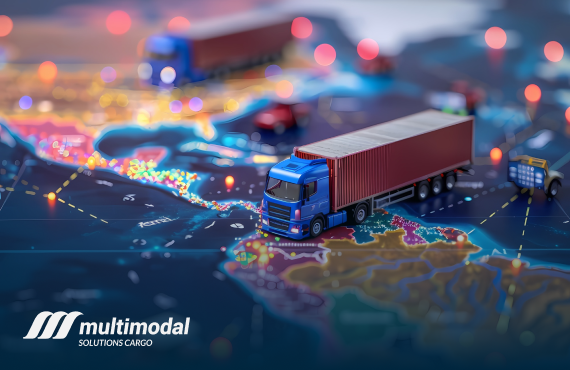
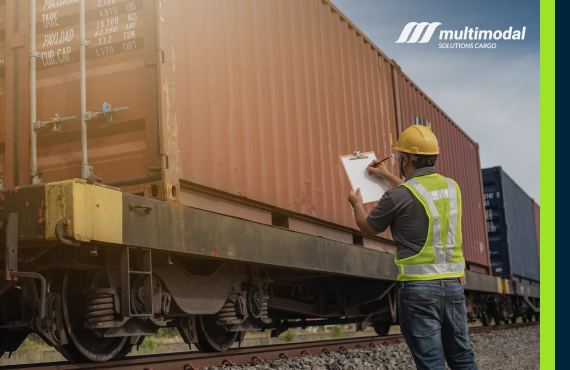
Intermodal logistics combines two or more modes of transportation -for example, rail and land transport- through the use of containers, which allows for a smoother transfer of cargo with less handling. Although this scheme is already common in countries such as the United States and Canada, it has been developed more recently in Mexico, driven by private initiative and the growth of foreign trade.
"Since the privatization of the railroads, there has been a lot of investment in motive power, track maintenance and route development," Joss explained.
As a result, domestic intermodal corridors and connections to the country's major ports and the U.S. rail system are already in place.
Although the country still faces structural challenges, intermodal has grown steadily. There are routes that connect strategic points such as Lázaro Cárdenas, Manzanillo, Veracruz, Altamira and Ensenada, in addition to key border crossings such as Laredo and Eagle Pass, providing access to more than 70 international routes.
Joss points out that the key is to understand the origin, destination and proximity to an intermodal terminal, as these factors determine its viability. Although transit times tend to be slightly longer than road transport, they are predictable and schedulable, which opens the door to more orderly logistics planning.
One of the highlights of the conversation was the emphasis on planning as the centerpiece of successful intermodal logistics. Joss cautions that many of the problems attributed to infrastructure actually stem from a lack of foresight in the logistics chain, especially during peak seasons.
In addition, he stresses that the shift to intermodal is not simply an operational issue, but a strategic transition that requires clear communication, team commitment and mutual trust.
"If a customer has a bad experience, it doesn't just close the door on me, it closes the door on the entire industry," he said.
At Multimodal, this transition is built from empathy and constant accompaniment. We analyze the specifications of the cargo, the client's needs and design an adapted scheme that reduces risks, additional costs and downtime.
Another key aspect that came up in the conversation was the human and collaborative approach with which Multimodal's operation is led.
"This work is not done by me alone. We all do it: operators, business partners, local transportation, in-house team," Joss shared.
This leadership is also reflected in the way the company takes care of its team, promotes work-life balance and generates motivated work environments, even in such a demanding sector as logistics. Beyond routes and systems, the real intermodal transformation lies in the people who make it possible.
Intermodal logistics is not just a trend; it is a concrete response to the demands of a complex economic environment, where efficiency and sustainability are indispensable. Through the vision of leaders like Joss Romero, it is clear that this model has the potential to redefine freight transportation in Mexico, provided it is built with planning, knowledge and commitment.